01 · HARD-TO-ABATE
Primary iron is the problem.
Steel can electrify downstream processes, but primary metallic iron remains essential — and difficult to decarbonize.
Fe+ is developing a limited supply of ultra-low-carbon hot-briquetted iron designed to help steelmakers — and the manufacturers they serve — materially reduce the embedded carbon in the products they sell.
Steel can electrify downstream processes, but primary metallic iron remains essential — and difficult to decarbonize.
Fe+ aims to supply the lower-carbon metallic feedstock rather than asking every steelmaker to build its own reduction solution.
At ~250,000 tpa, Fe+ does not need the entire market to agree. It needs the customers that value the difference most.
Steel is essential to modern prosperity, but a meaningful share of its emissions originates before the steel mill — in the conversion of iron ore into metallic iron.
Fe+ is pursuing a different pathway: commercial direct-reduction technology, a biomass-derived reducing gas, extensive waste-heat recovery, on-site energy generation and Atlantic marine logistics to create a premium metallic input with exceptionally low process emissions.
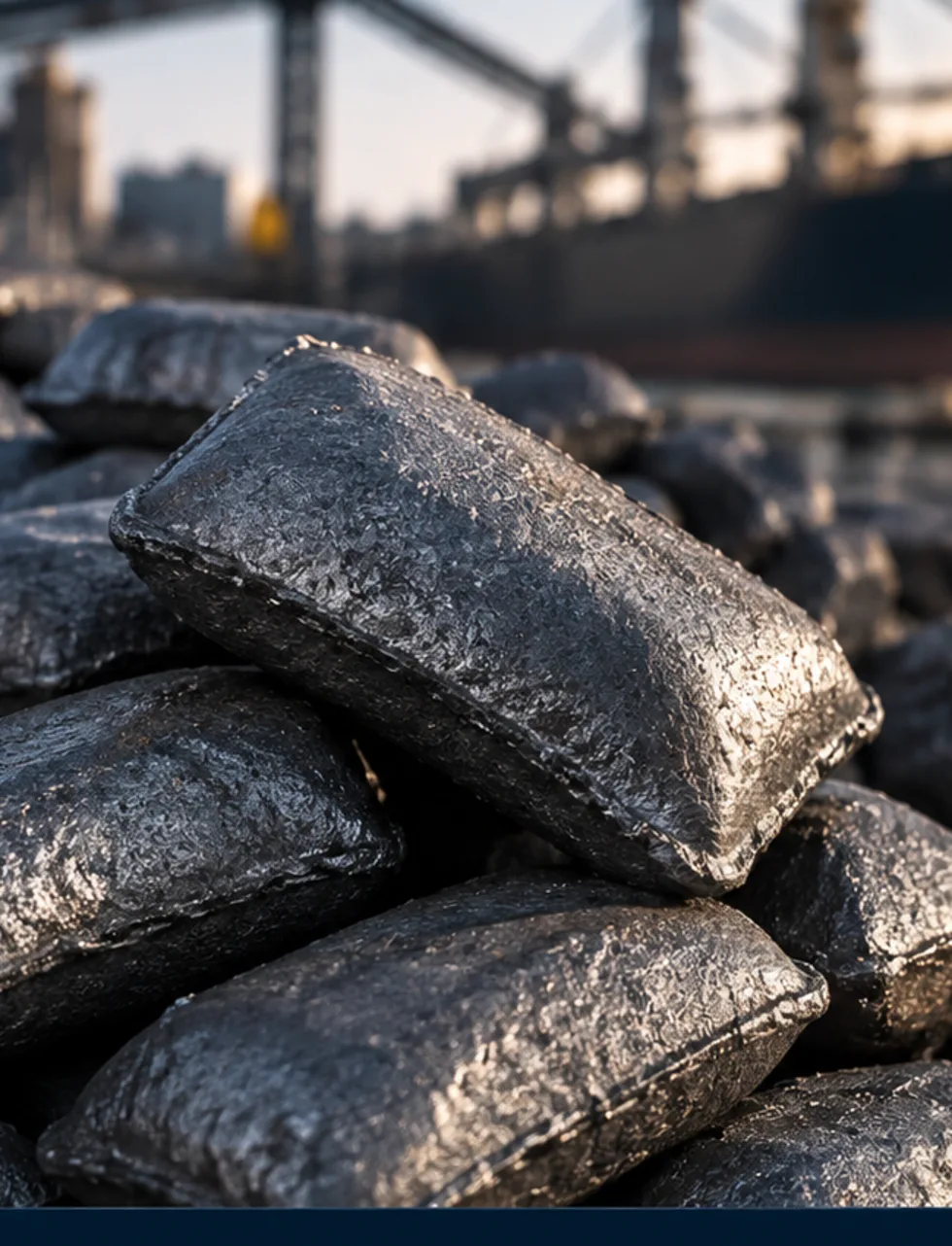
Fe+ is not trying to replace the world's iron supply. The project is intentionally sized so a small number of steelmakers — or the OEM value chains they serve — can secure a meaningful share of a premium, ultra-low-carbon metallic input.
The underlying HBI already has a credible path to market. The next commercial question is not simply whether the tonnes can be sold, but which customer values this particular carbon performance most.
We are therefore not beginning with the assumption that Fe+ should be priced as ordinary HBI plus a nominal “green premium.” The commercial question is simpler: what is scarce, verifiable low-carbon primary iron worth to the customer that can use it best?
Green hydrogen remains an important long-term decarbonization pathway. Fe+ is being developed so a steelmaker does not have to wait for abundant, competitively priced hydrogen infrastructure at its own site before lowering the carbon intensity of its metallic feedstock.
Commercial gas-shaft technology and conventional HBI finishing rather than experimental ironmaking.
Clean woody biomass converted and conditioned to provide a lower-carbon reductant pathway.
Recover process heat wherever practical, then use biomass-based generation to supplement site power demand.
Dense, transportable metallics suitable for deep-water export to international steel markets.
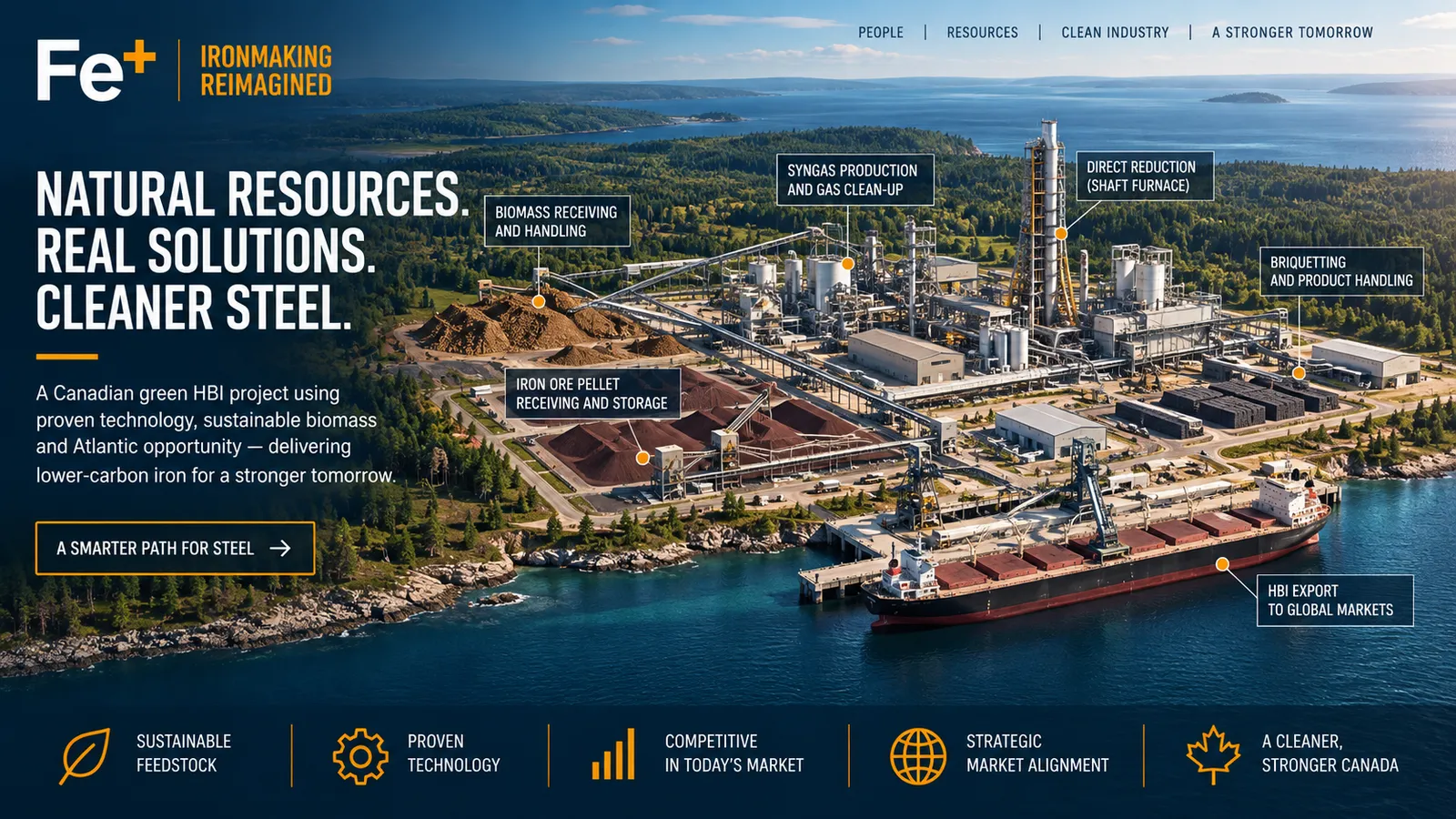
Conceptual visualization only. Final plant configuration, equipment, site layout and performance remain subject to engineering and commercial agreements.
Fe+ is advancing biomass procurement across Nova Scotia and marine-accessible North American forest basins while progressing DR-grade pellet supply and deep-water logistics. The objective is not the cheapest theoretical tonne. It is a secure, competitive and financeable supply system.
Local Nova Scotia supply remains attractive, supported by additional marine-accessible basins that protect reliability and negotiating discipline.
Pellet procurement is being developed around the quality and reliability required by the direct-reduction process and the final HBI specification.
Fe+ is being configured to recover waste heat and supplement remaining electricity demand with biomass-derived generation, reducing dependence on external grid capacity.
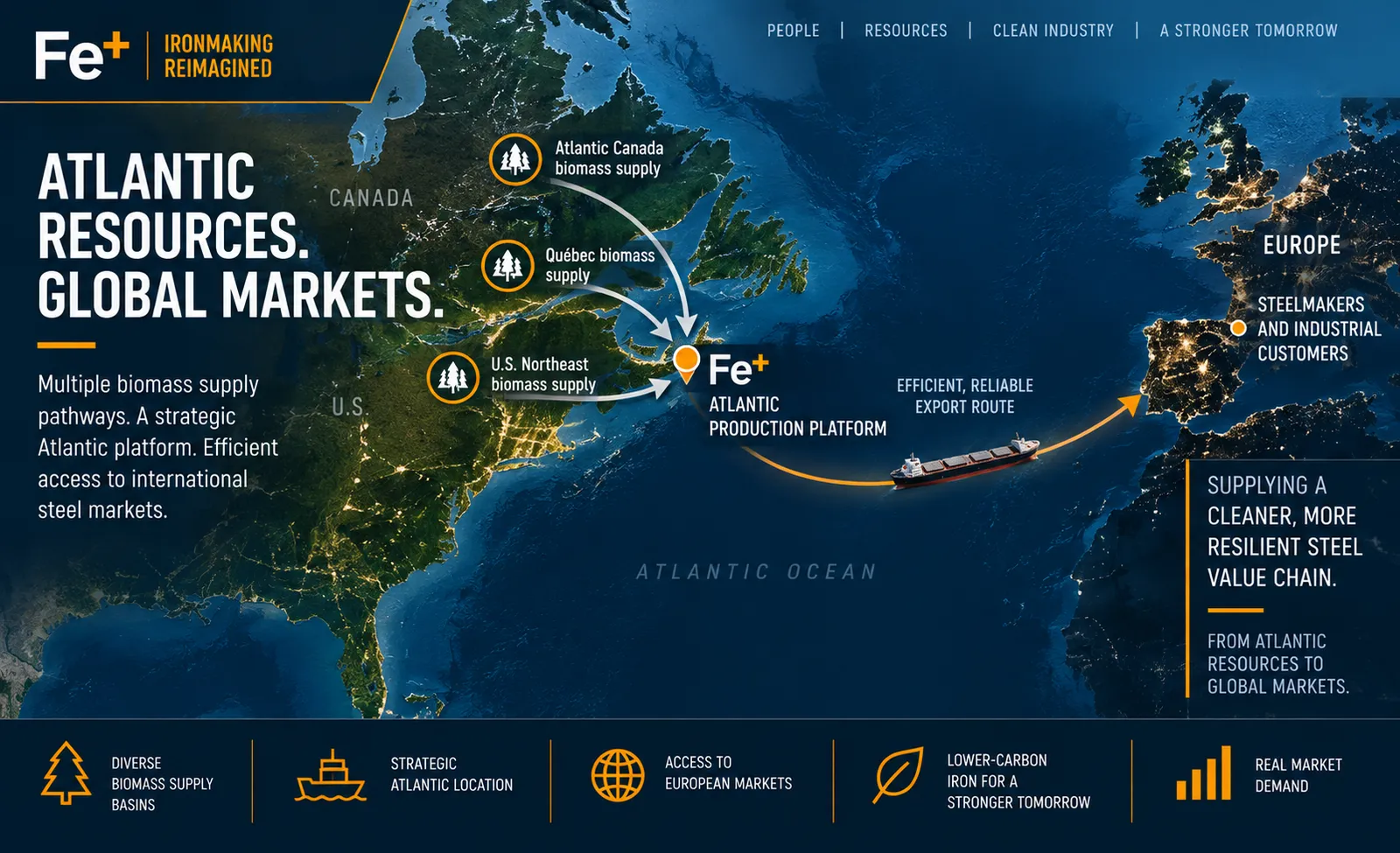
Fe+ is valuable only if its lower-carbon performance survives the value chain and helps the next customer make something measurably better. That is why we are engaging not only steelmakers, but the manufacturers that ultimately specify and market lower-carbon steel.
Fe+ sits at the intersection of Canadian resource value addition, hard-to-abate industrial decarbonization and Atlantic trade. The project is being built to create measurable impact and a financeable industrial business — not one at the expense of the other.
Move beyond upstream resources by converting DR-grade iron feed into a higher-value export metallic.
Target one of steel's most difficult emissions sources: the production of primary metallic iron.
Reduce exposure to grid availability and power-price constraints through integrated heat recovery and on-site generation.
Use Atlantic deep-water access to connect Canadian resources with global steel demand.
Select the final host configuration around the strongest combination of feedstock, infrastructure, logistics and public-sector support.
Build toward measurable impact, proven core technology, contracted revenue and progressive risk removal.
The remaining work is increasingly commercial: convert biomass optionality into contracted supply, finalize iron feed and energy integration, establish what premium customers will pay for the carbon performance, select the strongest host configuration and assemble the capital stack around those facts.
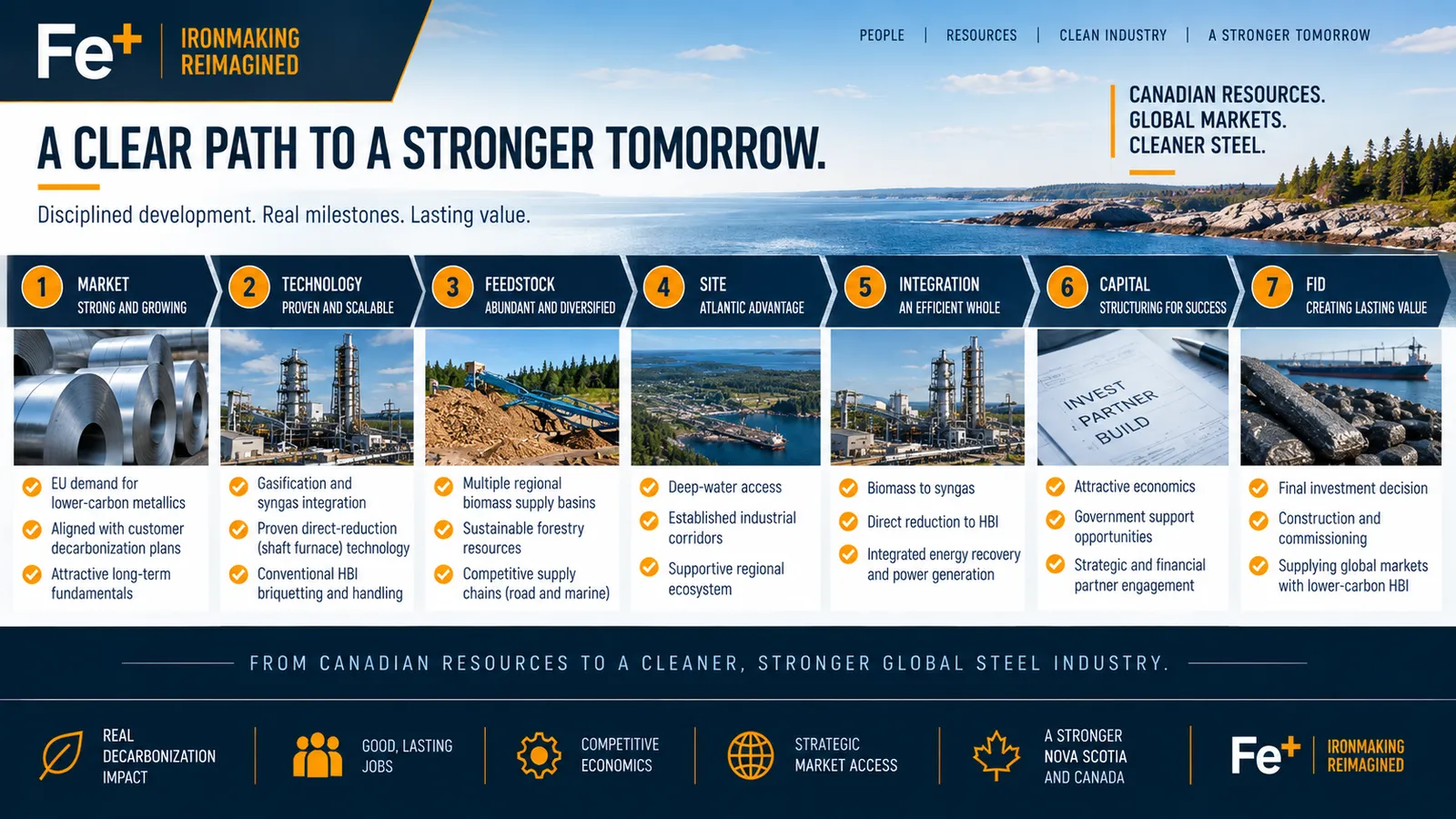
Fe+ is being structured around the elements strategic investors, pension capital, banks and public-sector partners require: measurable decarbonization, proven core technology, diversified supply, international market access, customer-backed revenue and a disciplined path to bankability.
Fe+ is beginning direct discussions with steelmakers, OEM-aligned value chains, strategic investors, financial institutions and public-sector partners prepared to evaluate a limited allocation of ultra-low-carbon HBI — and the opportunity to participate strategically in securing it.